Turn any textbook, slide deck, study guide, lecture notes, chapter or reading into a learning path.
Why TheScholar?
Built on some of the most replicated findings in cognitive psychology.
Retrieval practice
Generation effect
Immediate feedback
Spaced repetition
How we apply it
- 01Learn a small chunk
- 02Retrieve the core idea
- 03Apply it in a challenge
- 04Get immediate AI feedback
- 05Revise your understanding
- 06Repeat with spacing
Start with our open library
New books added regularly across math, science, computer science, humanities, and more.
Browse the libraryInside every lesson
TheScholar builds bite-sized lessons, each about 10 minutes of learning, optimized for clarity. Every lesson renders the pertinent figures, straight from your material.
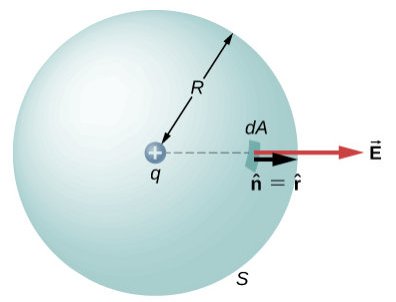
Electric flux measures the number of field lines passing through a surface. For a closed surface, Gauss's law states that the total flux is proportional to the charge enclosed:
Why it's powerful. Whenever you can exploit symmetry — spherical, cylindrical, planar — Gauss's law turns hard integrals into simple algebra.
Practice what you learned
After each lesson, practice the core concepts to make them stick.
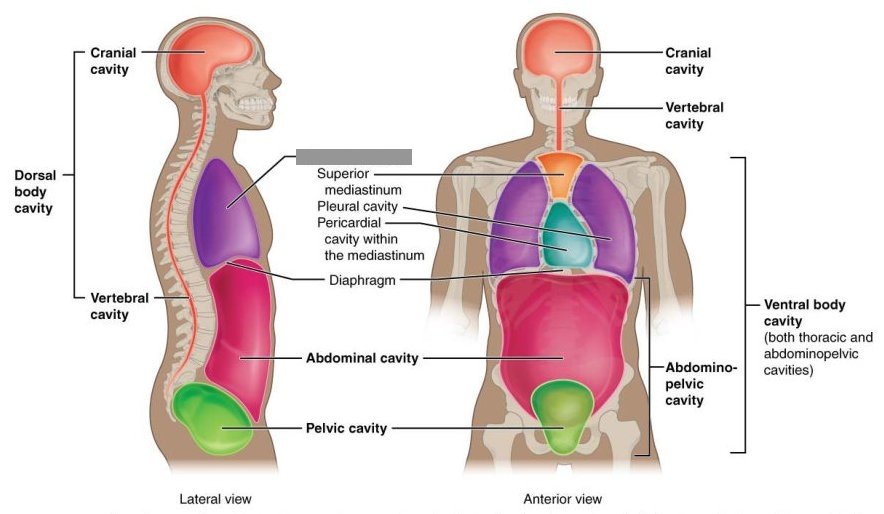
Image Occlusion
Study anatomy diagrams, maps, and charts with automatic hidden labels.
Export to Anki
Download your questions as Anki flashcards, one deck per section, with figures and equations included.
Challenge Questions
Solve an open-ended problem by hand, AI grades your reasoning. Challenges are skippable — the ones you skip wait for you at the end of the section, so you're never blocked mid-lesson.
A point charge +q sits at the center of a spherical Gaussian surface of radius R. Use Gauss's law to derive the magnitude of the electric field at the surface, and explain why your result is independent of R.
Excellent. You correctly applied symmetry to take E outside the integral, used the surface area 4πR² for the sphere, and noted that R cancels in the final expression.
Assistant
Stuck on something? Ask mid-lesson. It explains concepts the way your material does — and links the exact lesson it's drawn from.
Because flux counts the field lines passing through the surface, and every line from the charge inside crosses any closed surface around it exactly once. So the total depends only on the enclosed charge:
The surface's size and shape don't change it.
Flux through a closed surfaceSpaced Repetition
Every question you answer gets scheduled for review.
How it works
From PDF to your first lesson in minutes.
Upload a PDF or pick from the library
Drop in any material you have rights to use, or jump into one of our pre-built courses.
AI builds your course
The system breaks the book into sections, topics, and bite-sized lessons.
Learn one lesson at a time
Read the lesson, answer 3–5 practice questions, and earn your way along the path. Open-ended challenges get personalized AI feedback.
Review keeps it sticky
Questions you've answered get scheduled for review using spaced repetition — grounded in the spacing effect, one of the most replicated findings in cognitive science. Distributing practice over time produces stronger, more durable retention than cramming or rereading.
Ready to learn?
Sign in and try TheScholar with our open library, or upload your own material.
Get started for free